Breast cancer atlas helps chart course for precision oncology

Submitted by vicc_news on

A new molecular map of breast cancer has identified novel forms of the disease and provides a foundation for selecting personalized treatments guided by a tumor’s molecular characteristics rather than standard pathology alone.

In a study published Nov. 3 in Cell Reports Medicine, researchers at Vanderbilt-Ingram Cancer Center generated one of the largest transcriptomic maps of breast cancer ever assembled, integrating data from more than 7,600 tumors across 22 independent studies. The “transcriptome” is the complete set of RNA molecules produced by a tumor; it reveals biological details about gene expression and other molecular characteristics.
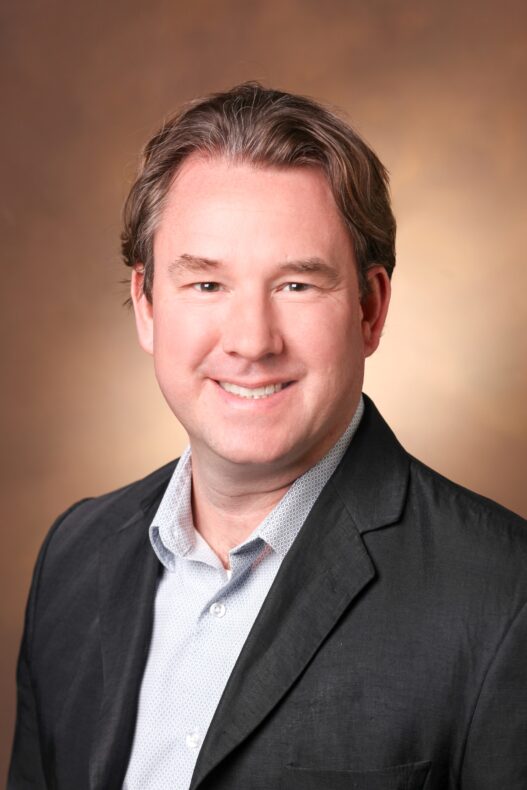
Portrait of a smiling man with graying brown hair wearing a black blazer and light patterned shirt against a warm brown background.
Brian Lehmann, PhD

“The breast cancer atlas provides an unprecedented view of the disease’s molecular diversity and reveals distinct tumor populations associated with different clinical outcomes, biological characteristics and therapeutic vulnerabilities,” said corresponding author Brian Lehmann, PhD, Research Associate Professor of Medicine at Vanderbilt Health. “By analyzing thousands of tumors together, we uncovered previously hidden forms of breast cancer that differ in prognosis, biology and treatment sensitivity.”

Breast cancer is traditionally classified and treated based on the presence — or absence — of hormone (estrogen, progesterone) and HER2 receptors. Transcriptomic profiling has further defined some molecular subtypes, but clinical responses to the same subtype are varied, and other subtypes noted by pathologists remain undefined.

The work builds upon earlier studies by Lehmann and Jennifer Pietenpol, PhD, Chief Scientific and Strategy Officer and Executive Vice President for Research at Vanderbilt Health, who helped define molecular subtypes of triple-negative breast cancer. Their research demonstrated that different triple-negative breast cancer subtypes display distinct sensitivities to therapeutic agents, and these insights have guided clinical trials for targeted treatments of triple-negative breast cancer.

For the new study, the investigators expanded their approach to include transcriptomic data across all types of breast cancer.

One of the long-standing challenges in cancer genomics has been the difficulty of comparing datasets generated across different studies, sequencing platforms and analytical methods, Lehmann noted. To overcome these barriers, the researchers adapted computational approaches originally developed for single-cell genomics, enabling the integration of thousands of breast cancer transcriptomes into a unified analytical framework.

The resulting atlas groups breast cancers into interconnected clusters that share common molecular features, treatment responses and clinical outcomes. When visualized as a map, the atlas resembles an archipelago, with biologically related tumor populations occupying distinct “islands” within a broader molecular landscape. Researchers envision that a patient’s tumor could eventually be positioned on this map to identify the most appropriate therapies and to improve treatment selection for clinical trials.

Highlights of the study’s findings:

  • The atlas reveals substantial biological diversity within traditional breast cancer categories, demonstrating that current classifications do not fully capture clinically relevant differences among tumors.
  • Estrogen receptor-low breast cancers behave more like ER-negative disease (not ER-positive as they are traditionally treated) and may require different treatment considerations.
  • The atlas identifies subsets of HER2-positive tumors that are most dependent on HER2 signaling and could benefit from specific types of HER2 kinase inhibitors.
  • The study uncovers a hidden neuroendocrine form of breast cancer associated with worse outcomes following standard chemo-endocrine therapy and points to FGFR1 as a potential therapeutic target.
  • The atlas defines a biologically distinct aggressive basal-luminal progenitor subtype of triple-negative breast cancer with potential vulnerabilities to RTK/MAPK-targeted and anti-angiogenic therapies.

“Some of the most important findings came from tumors hiding in plain sight,” Lehmann said. “We identified patient populations with poor outcomes that are not routinely recognized in current classification systems and uncovered potential therapeutic opportunities that may help address unmet clinical needs.”

In addition to developing the atlas, the researchers also created a tool that can assign tumors to subtypes using standard bulk RNA sequencing data to guide future research studies and clinical trials.

“The next critical step is prospective testing to determine whether treatment decisions guided by these transcriptional subtypes improve patient outcomes,” Lehmann said. “Our goal is to match patients to therapies based on the biology of their tumors. This atlas provides both a road map and a practical framework for achieving that vision.”

Beyond breast cancer, the researchers said the computational approach can be applied to integrate transcriptomic, proteomic and other large-scale molecular datasets across a wide range of diseases.

Xin Sun, PhD, a postdoctoral fellow in the Department of Medicine at Vanderbilt Health, is the study’s first author. Co-authors are Justin Balko, PharmD, PhD; Hanbing An, PhD; Paula Gonzalez-Ericsson, MD; Hailing Jin; Violeta Sanchez; Quanhu Sheng, PhD; Maksim Chapman; Thomas Stricker, MD, PhD; Vandana Abramson, MD; Ingrid Meszoely, MD, MMHC; and Melinda Sanders, MD.

The research was supported by the Department of Defense Breast Cancer Research Program, National Institutes of Health (grants P50CA098131, P30CA068485), Susan G. Komen, and Breast Cancer Research Foundation. Pietenpol, Ingram Professor of Cancer Research, holds the Brock Family Directorship in Career Development.

The post Breast cancer atlas helps chart course for precision oncology appeared first on Vanderbilt Health News.

Vanderbilt-Ingram Cancer Center names associate directors and new program leaders 

Submitted by vicc_news on

Four researchers at Vanderbilt-Ingram Cancer Center have assumed new leadership roles. 

Shared resources at Vanderbilt-Ingram are designed to support and enhance cancer-relevant research and scientific interaction by providing access to cutting-edge technologies and services, as well as scientific expertise.

Scott Hiebert, PhD, emeritus professor of Biochemistry and the Hortense B. Ingram Chair in Cancer Researchat Vanderbilt University, led these shared resources in the Cancer Center from 2010 to 2025. With his retirement from Vanderbilt University, Ben Ho Park, MD, PhD, director of Vanderbilt-Ingram, has appointed William Tansey, PhD, Ingram Professor of Cancer Research and professor of Cell and Developmental Biology, as the next associate director for Shared Resources for Vanderbilt-Ingram.  

As associate director for Shared Resources, Tansey will oversee 10 resources, including animal and human imaging, bioanalytics and proteomics, chemical synthesis and high-throughput analytics, cell imaging, data science, flow cytometry, genome editing, genomic sciences, survey and biospecimen, and translational pathology. In addition to his leadership roles at Vanderbilt-Ingram, Tansey has an active research lab that focuses on transcriptional dysregulation in cancer cells. 

“Shared resources provide Vanderbilt-Ingram Cancer Center investigators access to technologies, expertise, and a collaborative infrastructure that would be impractical to have in their own laboratories. Our shared resources are world-class in every respect, and each of them are backed by experienced teams of professionals dedicated to advancing and accelerating cancer discovery. I am honored and excited to oversee this vital and vibrant part of the Vanderbilt-Ingram Cancer Center mission,” said Tansey, who also serves as co-leader of the Genome Maintenance Research Program at Vanderbilt-Ingram. 

Translational Research, which is an essential component of Vanderbilt-Ingram and how findings in the lab are “translated” to clinical practice, was previously led by Park. With an ever-increasing number of opportunities to perform translational cancer research at Vanderbilt-Ingram, Douglas Johnson, MD, MSCI, professor of Medicine and the holder of the Susan and Luke Simons Directorship, has been named the next associate director for Translational Research.  

Johnson will oversee the implementation of emerging treatments and therapy advancements, such as cellular therapies, immunotherapies and targeted therapies. Johnson, who is clinical director of melanoma at Vanderbilt-Ingram, has expertise in this realm, having been an investigator on early clinical trials for immunotherapies and having recently implemented a tumor-infiltrating lymphocyte therapy service line for patients. 

“Vanderbilt-Ingram Cancer Center has incredible strengths in translating observations in the lab to the clinic, and from the clinic to the lab. I look forward to continuing to work with so many talented scientists and physicians in this role,” Johnson said. 

Douglas Kojetin, PhD, Ingram Associate Professor of Cancer Research and associate professor of Biochemistry, will join two other experts as co-leader of the Genome Maintenance Research Program. He joins Tansey and David Cortez, PhD, the Richard N. Armstrong PhD Professor of Innovation in Biochemistry, at the helm. The Genome Maintenance Research Program is focused on understanding how DNA is damaged, repaired, packaged, expressed and replicated. These are the processes that take place in carcinogenesis. 

“Dr. Kojetin will be an outstanding leader of the Genome Maintenance Program,” Cortez said. “His own research program is creative, rigorous and impactful. His thoughtfulness, enthusiasm and dedication to service will help our entire research community to make discoveries that reduce the suffering caused by cancer. I look forward to working with him.”  

Kristen Ciombor, MD, MSCI, has been named co-leader of the Gastrointestinal (GI) Cancer Research Program. She brings a wealth of knowledge to this role, having previously been co-leader of the Translational Research and Interventional Oncology Research Program. She is nationally and internationally recognized for her clinical research program and clinical expertise in colon cancer.

Ciombor also serves as the principal investigator for the NCI-funded National Clinical Trials Network (NCTN) Lead Academic Participating Site (LAPS) grant at Vanderbilt-Ingram. Ciombor will join Cathy Eng, MD, who has led the GI Research Program for seven years, as she transitions away from this role over the next six months to focus more on her role as associate director of Strategic Relations and Research Partnerships and the Young Adult Cancers Program at Vanderbilt-Ingram.  

Park said the four researchers have established track records that make them the perfect choice for their new respective leadership roles. 

“Drs. Tansey, Johnson, Kojetin and Ciombor are all highly respected cancer researchers with the leadership skills to effectively lead these areas at Vanderbilt-Ingram,” Park said. “Cancer encompasses a myriad of complicated diseases, and our investigators are approaching it from many fronts. The research areas these scientists lead, and their ability to cultivate interactions across and between programs, are integral to our mission of advancing treatments and improving outcomes for people with cancer.” 

The post Vanderbilt-Ingram Cancer Center names associate directors and new program leaders  appeared first on VUMC News.

Three VUMC researchers receive Komen leadership grants

Submitted by vicc_news on

Susan G. Komen has awarded $10.8 million in new research grants that will help propel innovative science and deliver hope to those facing breast cancer. The grant recipients include three researchers from Vanderbilt University Medical Center.

The grants support 25 cutting-edge projects at 17 institutions — marking a powerful commitment to improving outcomes for people living with breast cancer today and in the future.

“We are proud to support these exceptional researchers who are pushing the boundaries of what’s possible in breast cancer science,” said Paula Schneider, president and CEO of Susan G. Komen. “Research saves lives, and now more than ever, we must invest in science that brings hope to patients — especially those facing the most aggressive forms of breast cancer.”

Tuya Pal, associate professor of medicine and Ingram Associate Professor of Cancer Research (Daniel Dubois/Vanderbilt)
Tuya Pal, MD

The three VUMC researchers were each awarded Komen Leadership Grants of $400,000. The Komen Leadership Grant Program supports innovative, hypothesis-driven breast cancer research that aligns with Komen’s mission to save lives and improve personalized care and outcomes for all. Open to Komen’s Scientific Advisors and to Komen Scholars, the program funds bold, high-risk/high-reward projects with the potential to significantly advance the field of breast cancer research.

Ben Ho Park, MD, PhD

The VUMC recipients are Tuya Pal, MD, Ingram Professor of Cancer Research and professor of Medicine; Ben Ho Park, MD, PhD, Benjamin F. Byrd Jr. Professor of Oncology and professor of Medicine; and Jennifer Pietenpol, PhD, Ingram Professor of Cancer Research and professor of Biochemistry.

Through this research investment, Komen is prioritizing the most pressing challenges facing patients, including metastatic breast cancer, optimal health for all and the need for more precise, personalized treatment strategies to improve care and outcomes for everyone impacted by breast cancer.

“Komen’s commitment to breast cancer research comes at a pivotal time and will drive meaningful advances in our understanding of the disease and care of patients,” said Ann Partridge, MD, MPH, Chief Scientific Advisor for Komen. “By fueling science that is both innovative and inclusive, we’re accelerating progress where patients need it most — while building a foundation for individualized care for all.”

Jennifer Pietenpol, PhD

Komen is the largest nonprofit funder of breast cancer research outside the U.S. government, investing nearly $1.1 billion since its inception. Unlike many research institutions, Komen’s work is powered entirely by the generosity of individual donors, corporate partners and community supporters.

“Investing in top scientific talent is one of the most powerful ways we can drive progress,” said Pietenpol, PhD, Chief Scientific Advisor for Komen. “Komen’s commitment, especially to early-career researchers, cultivates a vibrant ecosystem where bold ideas and pioneering research can thrive, accelerating our path toward the cures we urgently seek.”

Pietenpol holds the Brock Family Directorship in Career Development at VUMC. Park is director of the Vanderbilt-Ingram Cancer Center and a member of the Komen Scientific Advisory Board. Pal is a Komen Scholar.

The post Three VUMC researchers receive Komen leadership grants appeared first on VUMC News.

Pelayo Correa and John Kuriyan named fellows of the AACR Academy

Submitted by vicc_news on
Pelayo Correa, MD
Pelayo Correa, MD

Pelayo Correa, MD, professor emeritus of Medicine and Pathology, Microbiology and Immunology, at Vanderbilt University Medical Center, and John Kuriyan, PhD, dean of the Vanderbilt University School of Medicine Basic Sciences, have been elected to the 2025 class of fellows of the American Association for Cancer Research (AACR) Academy.

John Kuriyan, PhD

The mission of the fellows of the AACR Academy is to recognize and honor extraordinary scientists whose groundbreaking contributions have driven significant innovation and progress in the fight against cancer.

Fellows of the AACR Academy constitute a global brain trust of leading experts in cancer science and medicine, working to advance the AACR’s mission to prevent and cure all cancers through research, education, collaboration, communication, advocacy and funding for cancer research.

Fellows of the AACR Academy are nominated and elected through a peer-reviewed process that rigorously evaluates each candidate’s scientific achievements and contributions to global cancer research. Only those whose work has made a profound and lasting impact on cancer research and related fields are considered for election and induction into the AACR Academy.

Correa was recognized for his “illustrious work defining the histological stages of gastric carcinogenesis through the ‘Correa Cascade’ and establishing the link between Helicobacter pylori infection and gastric cancer, fundamentally advancing the understanding of the pathology, epidemiology, and prevention of this disease.”

Kuriyan, Mary Geddes Stahlman Chair and University Distinguished Professor of Biochemistry, Chemistry, and Cell and Developmental Biology, was recognized for his “heralded contributions to cell signaling and kinase biology, including the elucidation of the switching mechanisms of tyrosine kinases such as SRC and EGFR, which has advanced the fundamental understanding of signal transduction regulation and informed the development of kinase-targeted therapies for cancer and other malignancies.”

Correa and Kuriyan are among 33 new fellows who will be recognized at the AACR Annual Meeting on April 25-30 in Chicago. Including this year’s class, only 375 cancer researchers have been named fellows of the AACR Academy.

The post Pelayo Correa and John Kuriyan named fellows of the AACR Academy appeared first on VUMC News.

Subscribe to Department_of_Biochemistry