Vanderbilt-Ingram Cancer Center will host two specialized retreats for lung care in October for colleagues across the organization to collaborate, review progress and identify opportunities to improve patient outcomes.
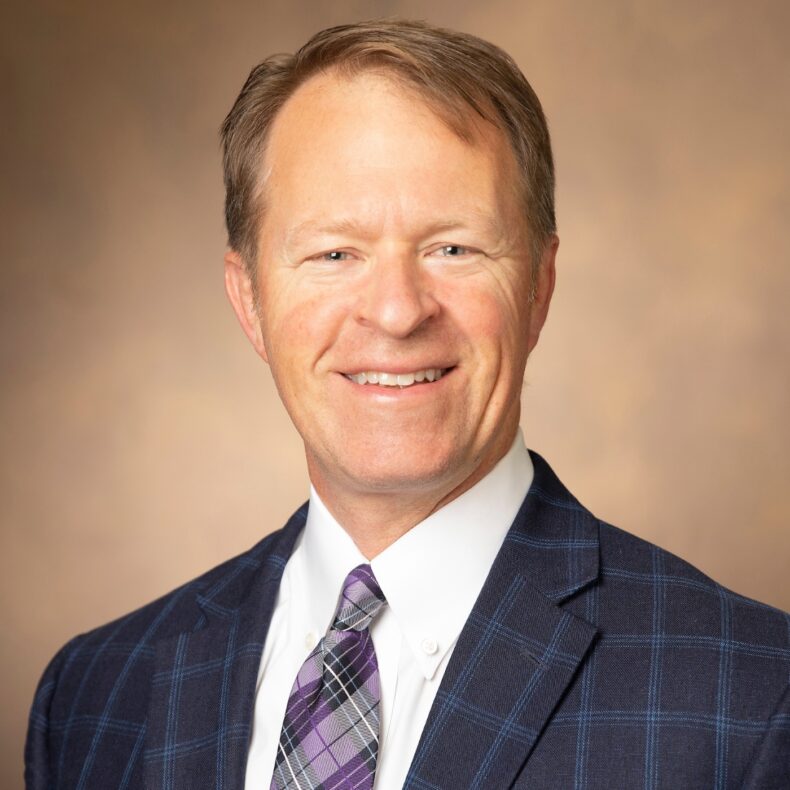
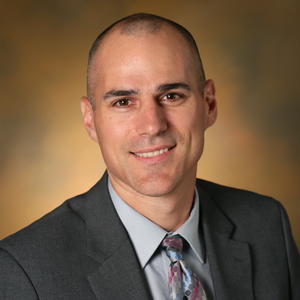
The event co-chairs are also co-leaders for the Thoracic Oncology program at Vanderbilt-Ingram: Fabien Maldonado, MD, MSc, Director of Interventional Pulmonology at the Vanderbilt Lung Institute, and Evan Osmundson, MD, PhD, Vice Chair of the Department of Radiation Oncology.
They worked in partnership with Melinda Aldrich, PhD, MPH, Professor of Medicine in the Division of Genetic Medicine and Clinical Pharmacology, for the research-based retreat. Aldrich is an accomplished lung cancer investigator and holder of the Robert A. Goodwin, Jr., MD, Directorship
“These retreats allow us to reflect on our progress, strengthen collaborations across disciplines and identify opportunities to further improve care for patients with lung cancer. We remain focused on building the most patient-centered, data-driven lung cancer program in Tennessee,” said Maldonado, holder of the Pierre Massion Directorship in Lung Cancer Research.
“At our last retreat, we launched a real-time lung cancer time-to-treatment tracker in Tableau to monitor patients through the referral, workup, and treatment pipeline,” Osmundson said. “Gathering again allows us to build on that momentum and continue elevating patient care.”
Research Retreat (Friday, Oct. 2, 9 a.m.-1 p.m.): Open to all researchers across all disciplines at 3401 West End Ave., Second Floor, Suite 290.
Clinical Retreat (Friday, Oct. 30, 7:30 a.m.-1 p.m.): Open to clinical practitioners and team members involved in lung cancer care and research, Scarritt Bennett Center, 1027 18th Ave. S.
These collaborative sessions offer a valuable opportunity for teams to align around the long-term strategic vision for the lung cancer program as well as assess program performance against national and regional benchmarks.
There will also be time to discuss and identify initiatives to drive progress over the next few years.
The University of California, Santa Cruz Alumni Association has announced Melinda Aldrich, PhD, MPH, Professor of Medicine in the Division of Genetic Medicine and Clinical Pharmacology at Vanderbilt Health, as one of its 2026 UC Santa Cruz Alumni Awards recipients.
The awards celebrate individuals whose vision, leadership and dedication have made a meaningful impact in their professions, in society, within the university community, and across the globe. Each honoree exemplifies the values and spirit of UC Santa Cruz through their achievements and contributions, according to a release from UC Santa Cruz.
Aldrich, who has authored more than 170 scientific publications and held leadership roles in numerous national and international scientific organizations, joins John Torigoe, James Hein, PhD, Peter Coha, Jim Gunderson, JD, and Stephanie Barron Lu as recipients of the 2026 UC Santa Cruz Alumni Awards; they will be honored Oct. 16 at a UC Santa Cruz celebration gala.
“This year’s Alumni Award honorees reflect the remarkable breadth of what UC Santa Cruz alumni go on to do and the many ways they contribute to their communities and the world,” said Chancellor Cynthia Larive, PhD. “Their accomplishments are distinct, but each has brought curiosity, purpose, and a commitment to making a difference to their work. We are proud to recognize them and celebrate the paths they have taken since their time at UC Santa Cruz.”
Aldrich, who is also Professor of Biomedical Informatics and Thoracic Surgery at Vanderbilt Health, received her BA in biology from UC Santa Cruz in 1992. She is an internationally recognized expert in lung cancer epidemiology with a research focus on lung cancer screening, risk prediction for early detection, genetics, and differences in health outcomes.
She contributed to health policy revisions of national lung cancer screening guidelines by demonstrating that high-risk African American individuals were disproportionately missed by existing screening eligibility criteria, earning her the Vanderbilt Chancellor’s Award for Research.
“I am deeply honored to receive the UC Santa Cruz Ethos Award. UC Santa Cruz helped shape my belief that scientific progress should benefit all communities, and that principle has guided my work,” said Aldrich, who holds the Robert A. Goodwin Jr., MD, Directorship at Vanderbilt Health. “To be recognized for that commitment by UC Santa Cruz, an institution that has meant so much to me, is especially meaningful.”
In a new study published in JAMA, the diagnostic yield of transbronchial lung biopsy was significantly higher when using a cryoprobe versus forceps in a group of patients with pulmonary nodules or masses, recent lung transplant, and diffuse parenchymal lung disease.
Fabien Maldonado, MD, MSc
A transbronchial lung biopsy is a minimally invasive procedure in which a bronchoscope — a thin, lighted tube — is guided through the nose or mouth into the lungs. Tools are then passed through the scope to collect tissue for laboratory analysis to diagnose lung conditions. A cryoprobe is a medical instrument that uses localized freezing to extract tissue. Forceps are used to pinch off tissue for removal, which can be faster but also crushes a portion of the tissue sample.
The FROSTBITE-2 randomized trial showed diagnostic yield during transbronchial biopsy was nearly 10 percentage points higher when performed using a 1.1-millimeter cryoprobe rather than with 2.0-millimeter forceps (88.6% vs 78.8%). The difference was particularly great among patients with pulmonary nodules or masses (83.2% vs 70.1%). In a secondary safety analysis, there were four pneumothoraces (collapsed lungs) requiring chest tube placement in the forceps group (1.6%) compared to none in the cryoprobe group. No patients experienced significant bleeding or respiratory failure events.
“A structurally intact, sufficiently large tissue sample from a targeted area in the lung increases the likelihood of an accurate diagnosis, which is what we strive for every time we perform a transbronchial lung biopsy,” said interventional pulmonologist Fabien Maldonado, MD, MSc, Professor of Medicine and Thoracic Surgery, and Director of Interventional Pulmonology at the Vanderbilt Lung Institute.
“We’re continually investigating ways we can improve these procedures, as accurate diagnoses up-front save time, which may help get patients the treatment they need faster. Evaluating the tools we use, particularly as innovations in this area occur, is an important avenue of investigation.
“Individuals who have known or suspected lung issues deserve to have the best possible diagnostic procedures, so they and their clinical teams have clear evidence of what is occurring in their lungs so informed treatment decisions can be made.”
Previous studies using a 1.9-millimeter cryoprobe have yielded larger lung tissue specimens at higher quality without crushing the sample, but there were also more bleeding and pneumothorax events. The FROSTBITE-2 trial used the 1.1-millimeter cryoprobe which, unlike the larger probes, is small enough to remove the biopsy specimen through the working channel without having to remove the scope, which increases safety.
Certain lots of the cryoprobe went under a Food and Drug Administration Class I recall in March due to reports of rupturing or bursting during activation; none of these events were reported in this trial.
The study was conducted under the auspices of the Interventional Pulmonary Outcomes Group, an international collaborative of clinical experts dedicated to improving patient care in interventional pulmonology through multicenter clinical trials and research. Maldonado, who holds the Pierre Massion Directorship in Lung Cancer Research at Vanderbilt Health, is vice chair of this group.
The trial was completed at nine U.S. medical centers including Vanderbilt Health that perform at least 100 transbronchial biopsies annually and have affiliated institutional centers for lung cancer, lung transplant and interstitial lung disease. Patients enrolled were 18 or older and scheduled to undergo transbronchial biopsy for lung nodules or masses, lung transplant, or diffuse parenchymal lung disease. Five hundred individuals were randomly assigned to either the 1.1-millimeter cryoprobe or the 2.0-millimeter forceps for the biopsy.
“These promising results bring us one step closer to making these vital diagnostic procedures even more safe, accurate and effective,” said Vanderbilt Health interventional pulmonologist Robert Lentz, MD, Associate Professor of Medicine and Thoracic Surgery. “Our team is currently conducting FROSTBITE-3, a randomized controlled trial comparing the 1.1-millimeter cryoprobe with instruments for lymph node biopsies, to determine whether this novel tool may help with molecular testing in patients diagnosed with lung cancer.
The FROSTBITE-2 study is an investigator-initiated trial. It was funded by Erbe, an international business that develops, manufactures and markets surgical systems. The funder had no role in trial design, data collection, data analysis, manuscript preparation, or the decision to publish.
Vanderbilt-Ingram Cancer Center has named Fabien Maldonado, MD, MSc, and Evan Osmundson, MD, PhD, as co-leaders of its Thoracic Oncology Program, reflecting the center’s commitment to expanding disease-specific cancer care for patients across the region.
Evan Osmundson, MD, PhD
As co-leaders, Maldonado and Osmundson will identify gaps and opportunities to improve prevention, detection and treatment of lung cancer. They will build collaborative bridges across thoracic specialties — including thoracic surgery, pulmonology, radiology, pathology, and medical and radiation oncology — recognizing that lung cancer treatment frequently requires a coordinated, multimodal approach.
They will also work to expand access to innovative technologies, including robotic bronchoscopy, which enables biopsy of previously unreachable areas of the lung; advanced local therapies such as minimally invasive surgery and adaptive radiotherapy; and targeted systemic treatments tailored to each patient’s tumor. This work will reduce wait times, improve diagnostic accuracy, lower toxicity and deliver personalized therapy within a multidisciplinary, team-based model of care.
“Lung cancer is a top priority for our cancer center because Tennessee has among the highest rates of lung cancer mortality in the country,” said Ben Ho Park, MD, PhD, the Benjamin F. Byrd Jr. Professor of Oncology and Director of Vanderbilt-Ingram. “The number of Tennesseans who smoke is higher than the national average, and our screening rates are lower — a combination that disproportionately affects our communities. The best way to cure lung cancer is to catch it early. Under the leadership of Drs. Maldonado and Osmundson, we are rebooting our Thoracic Oncology Program to bring together lung cancer researchers, care providers and trainees across Vanderbilt-Ingram in an even more collaborative way. That collaboration will drive higher-impact research and discoveries that translate quickly into meaningful benefit for our patients and the people of Tennessee.”
Maldonado, Professor of Medicine, Thoracic Surgery and Mechanical Engineering, focuses his research on clinical trials in interventional pulmonology, CT-based quantitative imaging for lung cancer and robotic bronchoscopy.
“Major advances in lung cancer care, including lung cancer screening and minimally invasive diagnostic and therapeutic interventions, have improved lung cancer survival rates by more than 25% over the past five years; however, much work remains, and we are excited to continue building the most patient-centered, data-driven, and technologically advanced lung cancer program in the state of Tennessee,” said Maldonado, who holds the Pierre Massion Directorship in Lung Cancer Research.
Osmundson, Associate Professor and Vice Chair of Clinical Operations in the Department of Radiation Oncology, where he serves as medical director, is board-certified in radiation oncology. He specializes in thoracic malignancies and lymphoma and leads several investigator-initiated clinical trials designed to enhance the synergy between radiation therapy and immunotherapy, with funding from the National Institutes of Health and other entities. He has also become a leading voice for patients facing barriers to care, with research advocating for prior authorization reform to reduce treatment delays in oncology.
“Thoracic oncology has entered a remarkable era of personalized medicine, in which therapies tailored to each patient’s individual cancer are producing outcomes we couldn’t have imagined even a decade ago. Patients are living longer and, importantly, living better than ever before, yet we know there’s still much further to go,” said Osmundson. “At Vanderbilt, our innovative research and clinical programs have helped drive this revolution, and our team-based care brings these discoveries to patients today. I’m more excited than ever to extend this care across our region and to discover what comes next.”
Together, the co-leaders bring complementary expertise aimed at delivering the most innovative and advanced options for patients at all stages of lung and other thoracic cancers. The goal of the Thoracic Oncology Program is to improve survival and quality of life — personalizing treatment for every patient, regardless of when they arrive at Vanderbilt-Ingram.
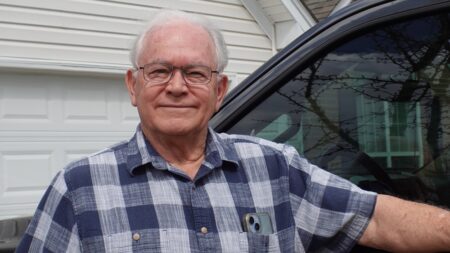
Dan Hannon of Georgia traveled to Vanderbilt Health, where a robotic bronchoscopy was used to retrieve tissue from a hard-to-reach area of the lung. Hannon now has a confirmed lung cancer diagnosis and will begin treatment. (submitted photo)
When Dan Hannon, 72, received guidance to have part of a lung taken out whether nodules were cancerous or not, he wanted a second opinion to see if he would indeed live the rest of his life without a full set of lungs.
After incidentally learning of a suspicious spot in his lungs while getting imaging to diagnose a kidney stone in 2025, he was advised to get his lungs checked. Several months later, he had a diagnostic PET scan under the care of a Georgia pulmonologist near his home in Buford, Georgia.
Some spots “lit up,” indicating metabolic activity, which often means cancer but may be due to infection or inflammation. He went on to get a bronchoscopy, a minimally invasive procedure using a camera on a thin tube to examine his lungs and obtain biopsy tissue.
He and his wife, Janice, learned the areas that were successfully biopsied were benign, but there were two additional areas the physician couldn’t reach.
Thus came the recommendation for an open surgery to remove the undefined tissue for biopsy. It was also advised that Hannon have a sizeable portion of his affected lung removed while still under anesthesia, regardless of the biopsy results.
That didn’t sit well with the couple, so they drove four hours to Vanderbilt Health in Nashville. Their son had been successfully treated for cancer there in the past.
“The prior lack of knowledge of whether I had cancer or not, and being told I should have surgery and get part of my lung cut out — whether it was cancer or not — was very bothersome,” Hannon said. “I decided to get a second opinion. I wanted all the information I could get to make a good decision, and that’s exactly what’s happened.”
Fabien Maldonado, MD, MSc, points out a target lesion easily visible in the image of the lung generated by the cone-beam CT. (photo by Susan Urmy)
At Vanderbilt Health, a new approach to a difficult diagnosis
The Hannons met with Fabien Maldonado, MD, MSc, professor of Medicine and Thoracic Surgery and director of Interventional Pulmonology at the Vanderbilt Lung Institute. Maldonado told them he was pretty confident he could reach those areas for biopsy using robotic bronchoscopy, the standard of care at Vanderbilt University Hospital.
“Robotic bronchoscopy, combined with cone-beam CT, has transformed the way we do things,” said Maldonado, who holds the Pierre Massion Directorship in Lung Cancer Research. “Ninety-five percent of people with lung nodules don’t have cancer, but for the 5% that do, they need to receive a diagnosis and get treatment as soon as possible.
Inside the robotic bronchoscopy advancing lung care
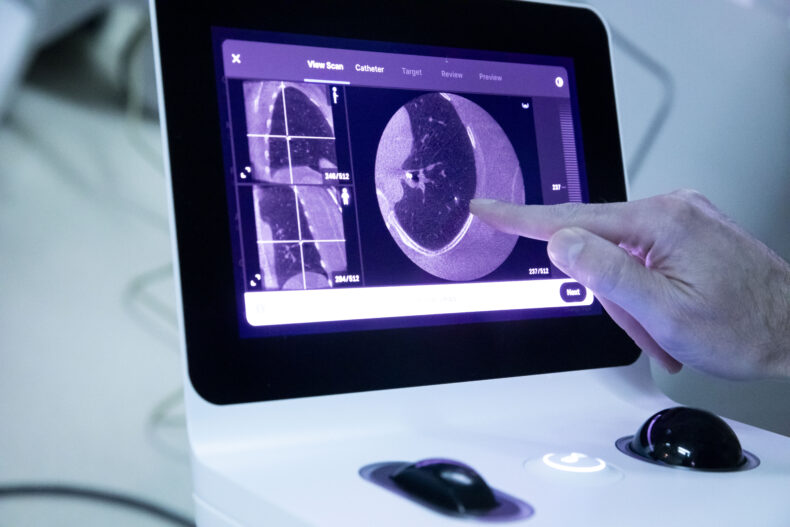
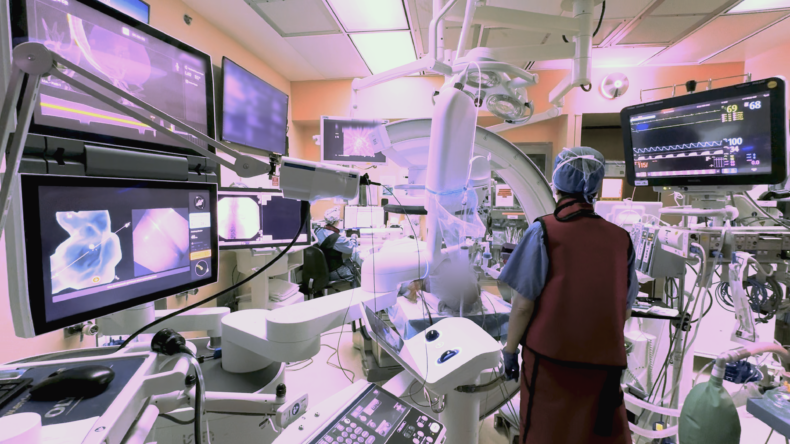
During a robotic bronchoscopy, physicians use a controller to precisely guide a bronchoscopy tube, which is typically smaller and more flexible than traditional tubes. The additional agility allows access into the lung’s harder-to-reach peripheral structures so biopsy tissue can be obtained. A 3D, high-resolution image of the lung obtained through cone-beam computed tomography (CBCT) is displayed on a monitor to guide the interventional pulmonologist’s progress.
At Vanderbilt Health, the four board-certified interventional pulmonologists who do the robotic bronchoscopies have all completed a fellowship and an additional year of interventional pulmonology training before receiving board certification from the American Association for Bronchology and Interventional Pulmonology.
A robotic bronchoscopy at Vanderbilt University Hospital. At center is the robotic arm, with a control console on the left of the interventional pulmonologist. The semicircle above the patient is a cone-beam CT scanner that creates a 3D view of the lung. (Vanderbilt Health)
Oncologist Mohamed Shanshal, MBChB, assistant professor of Medicine, said robotic bronchoscopy significantly improves getting patients the appropriate treatment as soon as possible, reducing their anxiety and improving care.
To expand access to the diagnostic procedure, the Vanderbilt Health Interventional Pulmonology program recently bought two additional robot and CBCT systems, making it one of the largest interventional pulmonology programs in the South. Four state-of-the-art bronchoscopy suites are slated to open later this year.
“This reduces diagnostic uncertainty and helps us move more quickly from suspicion to confirmed diagnosis,” Shanshal said. “Earlier and more accurate tissue diagnosis allows us to initiate treatment sooner, including surgery, targeted therapy, immunotherapy or clinical trials. In lung cancer, timing and adequate tissue for molecular testing are critical to optimizing outcomes.”
Maldonado explained that the Interventional Pulmonology program is a national leader in testing new technologies for safety and results.
“Many new technologies related to lung nodule biopsies have come on the market without any data to prove their benefit,” Maldonado said. “We are doing the randomized controlled trials here to prove whether something new is better than what we’re already doing. We study these technologies carefully and quickly, and within six months to a year, we know if the new is more beneficial and needs to be adopted.”
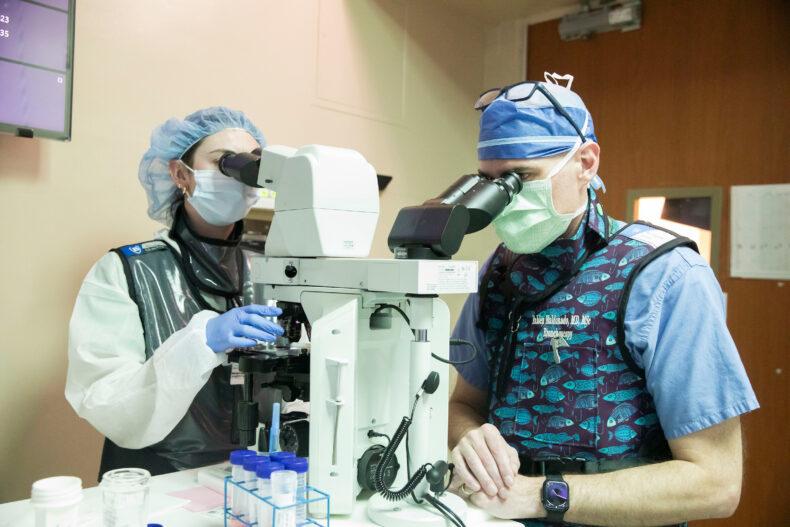
Cytotechnologist Sanders Murphree, left, and Fabien Maldonado, MD, MSc, view the biopsied tissue under a microscope to ensure it is of suitable quality for the pathologist to make a definitive diagnosis. (photo by Susan Urmy)
From uncertainty to action: What Hannon’s biopsy uncovered
For the Hannons, having the assurance that the robotic bronchoscopy would reach the spots in his lung and offer clearer details about their makeup was important.
“With the help of the robot, Dr. Maldonado was able to get what he needed, and it came back as adenocarcinoma,” Hannon said. “He was awesome when he explained his findings and everything we needed to do.”
Hannon has mucinous adenocarcinoma, a rare, non-small cell lung cancer that accounts for 2-10% of all lung adenocarcinomas and is most often found in the outer regions of the lung.
During a return visit to Nashville in late February, Hannon had a pulmonary function test, and met with Konrad Hoetzenecker, MD, PhD, professor of Thoracic Surgery, who will soon surgically remove the cancerous spots, and with Shanshal, his new oncologist.
“We’ve had a fantastic experience at Vanderbilt, and we’ve got a fantastic team of medical professionals we’re working with,” Hannon said. “We’re prepared for surgery and any future treatment because of the consultations we’ve had with Dr. Maldonado, Dr. Hoetzenecker and Dr. Shanshal. This has given me confidence in what has to happen.”
And as the Hannons move with hope toward healing, they’re looking forward to future cruises and travels to visit family.
Lung screenings are an important diagnostic tool for early detection of cancer, but low-dose CT scans cannot determine whether the pulmonary nodules identified in the imaging are cancerous or benign.
Specially trained radiologists, pulmonologists and thoracic surgeons analyze the imaging and then decide whether invasive biopsies are warranted to make that determination — a process called risk stratification of indeterminate pulmonary nodules.
An estimated 10% to 15% of the resections of these nodules turn out to be surgeries for benign tissue. Risk prediction software using artificial intelligence, such as the Lung Cancer Prediction Score, which was developed by Optellum, a lung health technology company, and approved by the Food and Drug Administration in 2021, aids clinicians in determining whether surgical resections are necessary. In a recent study, Vanderbilt Health researchers determined that AI-assisted decision-making with this software is cost-effective compared to clinician assessment alone.
The study, published March 5 in PLOS ONE, showed that AI-assisted decision-making resulted in an incremental cost-effective ratio of $4,485 per life year gained.
Eric Grogan, MD, MPH
“Artificial intelligence-based tools offer promising assistance to busy clinicians who evaluate suspicious lung nodules and seem to be cost-effective,” said the study’s corresponding author, Eric Grogan, MD, MPH, Ingram Professor of Cancer Research and professor of Thoracic Surgery at Vanderbilt Health.
To determine cost-effectiveness, the researchers constructed a decision model assuming guideline-based care from a payer perspective with a lifetime horizon. The base case is a 1.1 centimeter indeterminate pulmonary nodule in a 60-year-old patient who benefits from surgery. This nodule’s risk for lung cancer is about 65%. The model classified patients as low, medium or high risk using either clinician reasoning or clinician-plus-AI reasoning.
Stephen Deppen, PhD
“When we think of these AI clinical decision aids, they may not really help the true clinical expert, the thoracic radiologist or pulmonologist who sees 20 of these a day. Where the larger health care system impact occurs is when generalist physicians can rely on these tools to remove the easy, cancer and not cancer cases, so they can focus or get a consult on the most difficult,” said the study’s senior author, Stephen Deppen, PhD, associate professor of Thoracic Surgery and co-director of the Early Detection Research Network Lung Group’s National Clinical Validation Center.
Other Vanderbilt Health authors are Caroline Godfrey, MD, MPH, Ashley Leech, PhD, MS, Kevin McGann, MD, Jinyi Zhu, PhD, MPH, Hannah Marmor, MD, MPH, Sophia Pena, Fabien Maldonado, MD, MSc, Evan Osmundson, MD, PhD, and Stacie Dusetzina, PhD. The researchers received support from National Institutes of Health grants T32CA106183, K01DA050740, R01CA253923, P30CA068485, U01CA152662, R01CA252964 and U01CA152662.
Vanderbilt-Ingram Cancer Center will host “The Future of Lung Cancer Care,” a one-day educational event scheduled for May 8 from 8:30 a.m. to 2:30 p.m. at the Nashville Marriott at Vanderbilt University.
The conference will focus on recent improvements in patient outcomes and survival resulting from early detection, advanced imaging, minimally invasive procedures, and breakthroughs in targeted and immune-based therapies. Those improvements have resulted in the five-year survival rate nearly doubling over a decade, according to the State of Lung Cancer report from the American Lung Association.
The conference will feature nationally and internationally known experts.
Daniel Sterman, MD, director of the Multidisciplinary Pulmonary Oncology Program at New York University Langone Health, will speak about “Interventional Pulmonology: Bronchoscopically Delivered Treatment of Early Lung Cancer.”
Mohamed Shanshal, MBChB, assistant professor of Medicine in the Division of Hematology and Oncology at Vanderbilt Health and clinical director of Thoracic Oncology, will address “Medical Oncology: Integrating Immunotherapy, Targeted Therapy, and Beyond.”
Joseph Mammarappallil, MD, PhD, associate professor of Radiology and cardiothoracic imaging specialist at Duke University School of Medicine, will discuss “Interventional Radiology: Imaging-Driven Precision and Local Control.”
Several Vanderbilt Health lung cancer experts will also speak.
Discussion topics include advances in early detection and diagnostic precision, breakthroughs in minimally invasive biopsy and surgical techniques, the expanding role of targeted therapy and immunotherapy, evolving approaches to survivorship, and supportive care. The conference is open to families, caregivers, clinicians, trainees and anyone interested in lung cancer care. Physicians who attend the conference may claim 7.0 AMA PRA Category 1 credits toward continuing medical education.
Vanderbilt Health investigators have received a grant from AstraZeneca to lead a multisite, randomized controlled trial aimed at refining the standard of care when using robotic bronchoscopy combined with three-dimensional imaging to obtain lung samples for malignancy assessment and gene sequencing.
“Recent advances in minimally invasive bronchoscopic techniques have improved the diagnostic yield, particularly for peripheral pulmonary lesions, and in the recent VERITAS trial, we demonstrated that navigational bronchoscopy can achieve a diagnostic accuracy of around 79%,” said Fabien Maldonado, MD, MSc, professor of Medicine and Thoracic Surgery and director of Interventional Pulmonology at Vanderbilt Health. “That is statistically comparable to transthoracic needle biopsy, which is around 74% accurate.”
Fabien Maldonado, MD, MSc
“Because of the proven success of navigational bronchoscopy, we now want to determine whether or not the rapid, on-site evaluation (ROSE) of biopsy material remains a necessary step. We’ll test the hypothesis that this advanced bronchoscopy procedure done without ROSE guidance is non-inferior to bronchoscopy with ROSE. This could have immediate patient care implications, potentially shortening procedure time, improving specimen quality and avoiding complications from additional, unnecessary biopsies.”
ROSE has been the standard of care for decades in navigational bronchoscopy, but it adds time, cost and may paradoxically result in lower quality specimens. It can also lead to complications from unnecessary biopsies motivated by unclear intraprocedural results. With modern techniques such as robotic bronchoscopy with cone-beam CT technology, which is rapidly becoming the standard of care, the need for ROSE needs to be studied, said Maldonado, who holds the Pierre Massion Directorship in Lung Cancer Research.
The development of better biopsy approaches is driven by the fact that lung cancer kills more than 130,000 Americans annually, and survival depends on early diagnosis, which requires biopsy to be definitive. Current approaches make accurate biopsy challenging or even impossible for many hard-to-reach lesions.
These modern bronchoscopy techniques extend the range of bronchoscopes and the ability to access lesions reliably and safely throughout the lung, including in the peripheral zone, said study co-investigator Rafael Paez, MD, MSCI, assistant professor of Medicine in the Division of Allergy, Pulmonary and Critical Care Medicine.
The Advanced Robotic Techniques and Rapid Onsite Evaluation for Minimally Invasive Diagnosis and Next-Generation Sequencing (ARTEMIS) trial will be conducted at Vanderbilt Health and nine other United States medical centers. Expected enrollment will be 440 adults who are scheduled for a navigational bronchoscopy for the evaluation of a pulmonary lesion. Participants will be randomized to have the procedure with the addition of ROSE or to have the procedure without ROSE.
The primary objective is to assess the diagnostic yield of robotic bronchoscopy with and without ROSE for peripheral lung lesions. A secondary objective is to compare the adequacy of malignant tissue samples for next-generation sequencing (NGS) between the two intervention strategies.
ROSE involves the immediate microscopic assessment of biopsy specimens, typically performed by a cytotechnologist or cytopathologist, to confirm the adequacy of biopsy samples obtained during a bronchoscopy for the diagnosis of malignancy. This has also been an important step in the past to ensure sufficient tissue is obtained for NGS to identify genetic mutations to guide treatment decisions, said Maldonado.
A 2023 Rapid On-site Evaluation Practice Variability Appraisal survey of interventional pulmonologists revealed significant variation in ROSE utilization. Of the 137 respondents, 88% reported ROSE availability, while time constraints (28%), availability of cytology (22%) and scheduling conflicts (20%) were the most reported barriers to ROSE utilization.
“Additional motivation for determining if ROSE use and non-ROSE use yield similar outcomes during diagnostic procedures is that ROSE is historically poorly reimbursed and uses considerable hospital resources,” Maldonado said. “Our findings will guide interventional pulmonologists in optimizing workflow and technology during robotic bronchoscopy, aiming to maintain the nearly 80% diagnostic yield seen in trials like VERITAS, thus improving patient care as we evaluate pulmonary lesions.”
Vanderbilt Health’s Lucy Spalluto, MD, MPH, professor of Radiology and Radiological Sciences, and Jennifer Lewis, MD, assistant professor of Medicine in the Division of Hematology and Oncology, have received a grant from AstraZeneca to understand and improve veteran access to mobile lung cancer screening.
Lucy Spalluto, MD, MPH
The study, “REACHing veterans at high risk for lung cancer outside the guidelines and through mobile screening,” will receive approximately $1 million in total grant funding over a four-year period. As explained by Spalluto and Lewis, lung cancer is the leading cause of cancer death in the United States, with incidence higher in veterans compared to the civilian population.
“Improving access to lung cancer screening for a broader population, including those who live in rural areas, through mobile services can increase the early detection of lung cancer and improve lung cancer outcomes,” Spalluto says. “The REACH study explores the impact of mobile lung cancer screening in the Veterans Health Administration. An important component of the REACH study is understanding veterans’ perspectives of mobile screening.”
Jennifer Lewis, MD
Screening for lung cancer with low-dose CT scans is an effective strategy to detect lung cancer early and improve mortality. However, this screening is widely underutilized, including in the Veterans Health Administration. Veterans living in rural areas are less likely to be screened for lung cancer, and individuals living in rural areas have higher mortality from lung cancer compared to those who live in nonrural areas.
In response to the low screening and high mortality rates, the VA’s Midsouth Veterans Integrated Service Network has partnered with the VA Lung Precision Oncology Program to offer mobile lung cancer screening to better reach veterans who reside in rural areas. Spalluto and Lewis have been awarded the REACH grant through AstraZeneca to understand the reach of mobile lung cancer screening among veterans within and outside current screening eligibility criteria, as well as veterans’ experiences with mobile lung cancer screening.
This work is particularly pertinent to veterans who may have been exposed to war-related chemical, waste and other similar smoke inhalation.
“Exposures that veterans have had because of their military service, such as Agent Orange and burn pits, may place them at high risk for lung cancer,” Lewis explains. “This study will help us understand how many veterans are eligible for lung cancer screening not only based on age and smoking history, but also other important risk factors, such as family history, personal history of cancer, diagnosis of COPD and military environmental exposures. These data will be critical for VA leadership.”
While most women over age 50 schedule mammograms for breast cancer, only a minority who are also eligible for low-dose CT scans for lung cancer undergo those potentially lifesaving screenings. A new study shows that targeted outreach can close the gap.
The study results, published Dec. 1 in the Journal of theAmerican College of Radiology, showed that the improvement in lung cancer screenings exceeded the target enrollment set by the researchers. The study also demonstrated that two different types of outreach initiatives were effective in increasing uptake. Called CALM, an acronym for Coordinate A Lung screening with Mammography, the study was funded by the American Cancer Society.
At one academic medical center, a research team from pulmonary medicine determined eligibility by manual review of smoking history in electronic health records and then contacted patients directly to inform them of eligibility. The team also conducted surveys at mammography locations about smoking history. They had a target enrollment of 200 new patients for lung cancer screening and exceeded it by enrolling 214 patients.
At the other academic center, researchers from radiology identified patients eligible for lung screenings one month prior to their mammography appointments through a review of electronic health records. The patients were offered the opportunity to have both cancer screenings on the same day at the same location. They also exceeded their target enrollment of 322 patients by enrolling 445 patients.
“For years, we have recognized that many women screened for breast cancer are in fact dying from lung cancer. This study allowed us the opportunity to inform women and their referring providers of lung screening eligibility and to facilitate lung screening exams. We are incredibly grateful for the American Cancer Society and for the National Lung Cancer Roundtable as they supported this multicenter initiative. We plan to continue these efforts at VUMC and with institutions across the country to save more lives,” said Kim Sandler, MD, professor of Radiology and Radiological Sciences at Vanderbilt University Medical Center, director of the Vanderbilt Lung Screening Program, and the study’s corresponding author and co-principal investigator.
A previous study revealed that 58% of women who were eligible for lung cancer screening had reported having a mammogram within two years compared to only 7.9% who underwent lung cancer screening. Overall, participation in lung cancer screening by both men and women is low, with less than 20% of those eligible for low-dose CT scans receiving the screenings.
“It has been more than 10 years since annual screening for lung cancer was recommended, and screening rates still are disappointingly low. There are many reasons for these low rates, but mostly identifying eligible individuals is challenging in the primary care setting, and there is evidence showing a surprising lack of awareness about lung cancer screening among eligible individuals. The CALM model demonstrates we can successfully recruit eligible women through mammography screening. Perhaps we also will be able to enlist them to encourage eligible family members to have a conversation about lung cancer screening with their health care providers. There is enormous potential here, and the ACS is thrilled with the outcome of this study,” said Robert Smith, PhD, senior vice president and director of the American Cancer Society Center for Early Cancer Detection and the study’s other co-principal investigator.
The researchers hypothesized that mammography screening could be a “teachable moment” for women who are also eligible for lung cancer screening. The study period was from November 2019 to December 2021, but data from 2020 was excluded because of the disruptions in health care screenings due to the onset of the COVID-19 pandemic. Initially, women were considered eligible for lung cancer screening from ages 55 to 80 with a 30 pack-year history of smoking; guidelines expanded in 2021, and women were eligible beginning at age 50 with a 20 pack-year history. One pack year is equal to smoking an average of 20 cigarettes, or one pack, every day for a year. A person who has smoked half a pack per day for 30 years has a 15 pack-year history.
Other VUMC authors on the study are Caroline Godfrey, MD, MPH, Valerie Welty, PhD, Stephen Deppen, PhD, MA, Alexis Paulson, MS, Shanna Joyner, Hannah Marmor, MD, MPH, Grace Wallace, CCRC, Lauren Hatcher, MD, MBA, Landon Fike, MD, and Arulita Gupta, MD.