Vanderbilt-Ingram Cancer Center will host two specialized retreats for lung care in October for colleagues across the organization to collaborate, review progress and identify opportunities to improve patient outcomes.
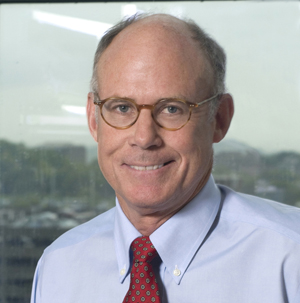
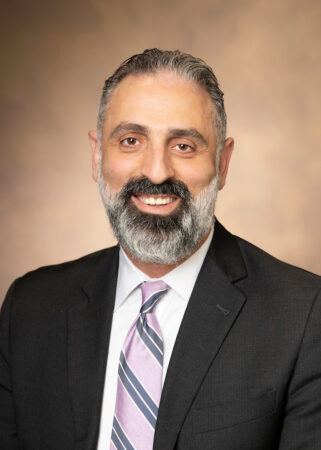
The event co-chairs are also co-leaders for the Thoracic Oncology program at Vanderbilt-Ingram: Fabien Maldonado, MD, MSc, Director of Interventional Pulmonology at the Vanderbilt Lung Institute, and Evan Osmundson, MD, PhD, Vice Chair of the Department of Radiation Oncology.
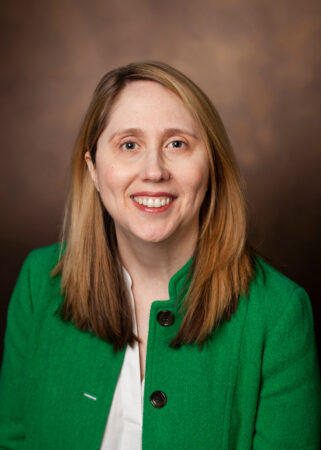
They worked in partnership with Melinda Aldrich, PhD, MPH, Professor of Medicine in the Division of Genetic Medicine and Clinical Pharmacology, for the research-based retreat. Aldrich is an accomplished lung cancer investigator and holder of the Robert A. Goodwin, Jr., MD, Directorship
“These retreats allow us to reflect on our progress, strengthen collaborations across disciplines and identify opportunities to further improve care for patients with lung cancer. We remain focused on building the most patient-centered, data-driven lung cancer program in Tennessee,” said Maldonado, holder of the Pierre Massion Directorship in Lung Cancer Research.
“At our last retreat, we launched a real-time lung cancer time-to-treatment tracker in Tableau to monitor patients through the referral, workup, and treatment pipeline,” Osmundson said. “Gathering again allows us to build on that momentum and continue elevating patient care.”
Research Retreat (Friday, Oct. 2, 9 a.m.-1 p.m.): Open to all researchers across all disciplines at 3401 West End Ave., Second Floor, Suite 290.
Clinical Retreat (Friday, Oct. 30, 7:30 a.m.-1 p.m.): Open to clinical practitioners and team members involved in lung cancer care and research, Scarritt Bennett Center, 1027 18th Ave. S.
These collaborative sessions offer a valuable opportunity for teams to align around the long-term strategic vision for the lung cancer program as well as assess program performance against national and regional benchmarks.
There will also be time to discuss and identify initiatives to drive progress over the next few years.
When Melissa Glass met with Aimal Khan, MD, Assistant Professor of Surgery at Vanderbilt Health, to make a surgical plan for her recently diagnosed colon cancer, she had one big request.
She wanted to be back home in Morgantown, Kentucky, and healthy enough to participate in an annual event for Butler County Schools students that is close to her heart.
“It was important to me to make it to our Happy Feet program, where we provide free shoes for students who are underprivileged,” she explained. “They get to pick their shoes out before school starts, and I look forward to this event all year. We fundraise for it, and it’s just such a great day.
“I promised my co-workers I would sit and not help set up boxes, so I behaved and didn’t overexert myself. We love our students, and I was just so happy I was there.”
Glass, a family resource coordinator for the school system, was overwhelmed when health symptoms led to a colon cancer diagnosis at age 44. She is among a growing number of young adults diagnosed with early-onset colorectal cancer, a trend that led the American Cancer Society to update their recommendation to begin screenings at age 45 rather than 50.
Glass talked to a friend who had a similar experience, and they recommended Khan, who had been their surgeon. Khan recommended a minimally invasive, robot-assisted approach to remove the sigmoid colon cancer using a newer, single-port (SP) robotic platform.
“Vanderbilt is among the highest volume, single-port robotic colorectal surgery programs in the United States,” Khan said. “The SP platform allows us to complete an entire colon or rectal operation through one small incision, usually hidden at the bikini line or around the belly button, rather than four or five separate incisions required by conventional robotic or laparoscopic surgery. Very few centers in the country have the training and case volume to offer this for complex colorectal disease.”
Minimally invasive, robotic procedures have been in use for more than two decades and have now become common throughout the world. More recent improvements in the size and function of individual surgical tools, and advances in robotic technology, have made single-port surgeries possible, according to Matthew Spann, MD, Associate Professor of Surgery and Chief of the Division of General Surgery at Vanderbilt Health.
Single-port robotic systems feature small surgical instruments and a camera that are inserted through a tube in a single incision. The instruments, such as scissors, forceps and graspers, can pivot 360 degrees, giving surgeons better access to structures during complex procedures.
And while the aesthetics of having just one small incision rather than several is certainly positive, more importantly, SP colorectal surgeries have been proven to have similar outcomes when compared to a conventional surgical approach, Khan said.
“This is what separates a real advance from a cosmetic one,” he explained. “Complication rates are comparable to the conventional approach. For our cancer patients, we removed the same number of lymph nodes and achieved clean margins around the tumor at the same rate, which are the two measures that determine whether a cancer operation provides the best chance for a cure.”
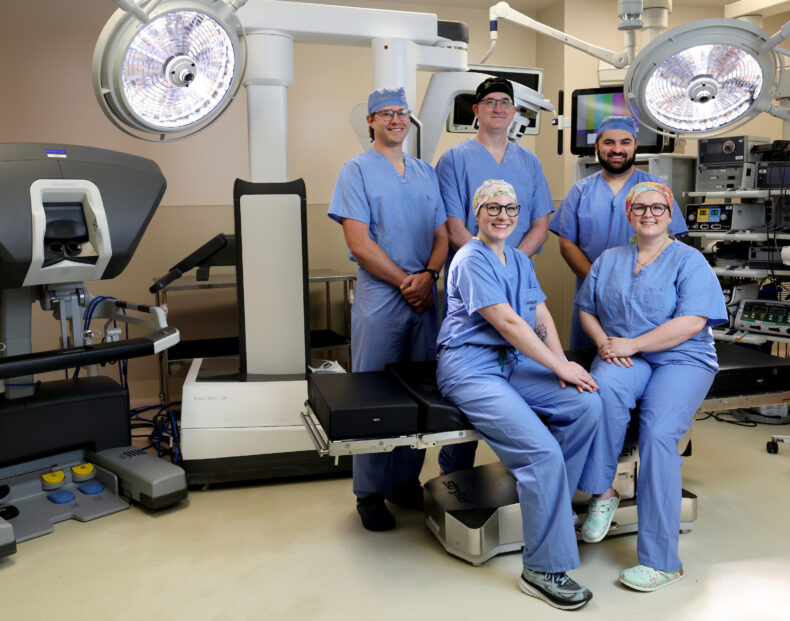
Members of the Vanderbilt Health Colon and Rectal Surgery team in front of the single-port (SP) robotic system they use for colorectal surgeries. The team includes, front row, left to right, Katie Martin, PA-C; and Shannon McChesney, MD. Back row, left to right, Phillip Williams, MD, MSc; M. Benjamin (Ben) Hopkins, MD; and Aimal Khan, MD. (photo by Donn Jones)
Other results for SP colorectal surgeries at Vanderbilt Health are just as impressive:
Patients who have these surgeries go home up to 50% sooner. The length of stay after most SP colorectal surgeries is one day, with a significant number of patients going home the same day.
Patients need substantially less post-surgery narcotic pain medication (25% less), and many go home without an opioid prescription at all. Since every postsurgical opioid prescription is a potential entry point to long-term opioid use, this is important.
Patients report less interruption to their lives, as well as satisfaction with the procedures overall.
Factors that contribute to the success of SP robot-assisted surgeries are the volume of procedures performed at a health care center, as well as the specialized, intensive training clinicians obtain to perform these procedures, said Spann.
“Training in minimally invasive robotic procedures — now including single-port surgeries — is increasingly being incorporated into specialty-specific surgical fellowships,” he said. “This is certainly the case here at Vanderbilt Health.”
And training opportunities led by Vanderbilt Health surgeons extend to established surgeons at other health care centers.
“We have hosted dozens of surgeons from all over from the country who have come here to learn from our experience in single-port robotic surgery,” Khan said. “The Vanderbilt Health colorectal team is also among the national leaders in research on single-port robotic colorectal surgery.”
M. Benjamin (Ben) Hopkins, MD, who leads the section of Colon and Rectal Surgery at Vanderbilt, shared the team’s experience recently at the summer meeting of the Piedmont Society of Colon and Rectal Surgeons, a regional professional medical organization.
“The level of national interest in what we are doing with the SP robot has been remarkable,” Hopkins said.
Khan and Hopkins, along with fellow surgeons Shannon McChesney, MD, and Phillip Williams, MD, MSc, have all completed colorectal surgical fellowships and have training in multiport and single-port robotic surgery. Physician assistant Katie Martin, PA-C, was instrumental in getting the program started and now leads training courses for advanced practice providers interested in learning how to use the SP platform. There are plans to train more Vanderbilt Health surgeons on the SP robot.
Single-port robotic surgeries might not be the best surgical approach for every patient, Khan said. Surgical plans are made in collaboration with each patient and depend on the type and location of the cancer, whether previous abdominal surgery has resulted in scarring, anatomy and other conditions.
As for Glass, she spent two nights at Vanderbilt University Hospital. Her recovery following surgery went well, with manageable pain. She credits her family, including her husband, Jon, and their two daughters, and her colleagues at Butler County Schools for supporting her throughout her experience.
Her short recovery time meant she was able to begin chemotherapy treatment at Vanderbilt-Ingram Cancer Center with Cathy Eng, MD, the David H. Johnson Professor of Surgical and Medical Oncology, whom she also praised highly. Glass has just two chemotherapy sessions remaining and is ready to fully return to focusing on her family and the students of Butler County.
“I’m a very private person, so the fact that I’m sharing my story lets you know how I feel about Dr. Khan and the care I received at Vanderbilt,” she said. “I feel like God’s hand was on it because we really didn’t know where to go or what to do. My husband and I quickly knew that we were in the right place.”
Bladder cancer patient Patrick Delahoussaye, 81, of Brentwood, Tennessee, has been trying to drink plenty of water over the past 18 months — up to 96 ounces a day — to keep a slow-release medication “pretzel” from lodging in his bladder, which can be very irritating.
And he also has some pain when the pretzel is removed and another inserted periodically in clinic, but he is no longer riddled with the cancer that “looked like a coral reef,” Delahoussaye said.
The first line treatment for noninvasive bladder cancer is Bacillus Calmette-Guérin (BCG), an immunotherapy that has been used since the 1980s to trigger a patient’s immune system to fight off cancer cells and reduce the risk of cancer coming back inside the bladder.
But BCG was ineffective for Delahoussaye after a year of treatment, so his options were limited to bladder removal — a 5-7-hour surgery that requires a four-day hospital stay, with 1 in 3 patients returning to the hospital within 30 days — or joining a clinical trial.
“To do a bladder removal for a noninvasive cancer, understandably for many people, is a hard sell,” said Amy Luckenbaugh, MD, Associate Professor of Urology in the Division of Urologic Oncology at Vanderbilt Health.
“And so, we have new chemotherapies that are in a little device that we call a ‘pretzel’ that we insert in the bladder, and it gives off the chemotherapy slowly over time and only impacts the bladder lining without impacting the whole body.”
The pretzel device gives off chemotherapy slowly over time and only impacts the bladder lining without impacting the whole body. (photo by Erin O. Smith)
Delahoussaye was the first Vanderbilt Health patient enrolled in the SunRISe-5 trial for the TAR-200 gemcitabine pretzel in October 2024, after three surgeries and ineffective treatment with BCG. He had two big risk factors for bladder cancer in his history — smoking and chemical exposures. He stopped smoking 44 years ago but believes he could have also been exposed to chemicals during his time managing an aircraft painting facility in Louisiana.
“I had some hard times in the beginning of the trial; as you can imagine, putting gemcitabine in your bladder for 24 hours a day, seven days a week, can get aggravating,” he said. “It’s not easy, but I wanted to do it not only to cure my cancer but also to help people after me.”
Bladder cancer is the 10th leading cause of cancer death in the U.S., with 1 in 333 women and 1 in 125 men dying from it, according to the American Cancer Society. Delahoussaye and his wife, Roxane, had a friend who died of bladder cancer, which reinforced his motivation for entering the trial.
“I’m always pretty optimistic as a person,” Roxane Delahoussaye said. “He’s had a lot of ups and downs with his health; he also had Merkel cell carcinoma in 2012. When this cancer came along, yes, I was worried, but knowing it was contained inside the bladder was a good sign.
“Once it leaves a bladder, and the cancer metastasizes into the lining, and possibly outside of the bladder, that’s when you worry. And he never had that issue. That helped me sleep at night. It was good news,” she said.
Patrick Delahoussaye credits Bree Duncan, BSN, RN, Research Nurse Specialist IV, for helping him through the trial over the past year and a half.
“The experience has been nothing but outstanding, in most ways, and the treatment eliminated my bladder cancer,” he said. “The inside of my bladder looks like it did the day I was born. There’s no cancer showing in the urine or the blood.”
Roxane Delahoussaye agreed.
“Bree would tell him, ‘Don’t give up. I know you want to give up on the trial but stay with it. You’re doing great.’ She was such a cheerleader, and she was always available. Patrick always told me, ‘If it wasn’t for Bree, I probably would have quit.’ I just can’t sing Vanderbilt’s praises enough because I think my husband’s alive because of Vanderbilt, and I really do mean that.” she said.
Bhagirathbhai Dholaria, MBBS, Associate Professor of Medicine and a hematopoietic cell transplantation specialist, along with peers from several other transplant centers across the country, recently reached a major milestone in stem cell transplantation.
Bhagirathbhai Dholaria, MBBS
Their clinical trial, called ACCESS, showed that using “mismatched donors” for blood or bone marrow transplants is safe, potentially opening the door to cures for blood cancers such as leukemia and lymphoma.
Findings from the ACCESS trial were recently published in the journal JAMA Network Open.
“Many patients need a donor whose tissue type closely matches their own,” Dholaria said. “Historically, patients from racial and ethnic minority groups have had a harder time finding a perfectly matched donor because donor registries included fewer people from their backgrounds.
“As a result, minority patients are referred less often or move more slowly toward transplant because finding a fully matched donor can be difficult. If doctors believe a suitable donor is unlikely, they may never see a transplant physician in the first place.”
Expanding access and opportunity at the same time
The ACCESS trial set out to dismantle this barrier by allowing mismatched, unrelated donors for patients lacking a full match. Typically, traditional clinical trials restrict enrollment to matched donors only.
By eliminating the requirement for a perfectly matched donor, ACCESS opened the door for more Asian, Black, Hispanic and multiracial patients who previously may not have been eligible for a transplant or clinical trial.
Nearly half of participants in this trial identified as members of racially or ethnically underrepresented groups.
Comparing nearly 670 patients across three different studies, Dholaria and colleagues found that ACCESS participants were more than 25 percentage points more likely to come from diverse racial and ethnic backgrounds than those enrolled in other trials. The broader eligibility criteria also expanded the pool of potential donors available to patients.
“The more we broaden access to transplant, the more patients we can give an opportunity for cure,” said Dholaria.
The University of California, Santa Cruz Alumni Association has announced Melinda Aldrich, PhD, MPH, Professor of Medicine in the Division of Genetic Medicine and Clinical Pharmacology at Vanderbilt Health, as one of its 2026 UC Santa Cruz Alumni Awards recipients.
The awards celebrate individuals whose vision, leadership and dedication have made a meaningful impact in their professions, in society, within the university community, and across the globe. Each honoree exemplifies the values and spirit of UC Santa Cruz through their achievements and contributions, according to a release from UC Santa Cruz.
Aldrich, who has authored more than 170 scientific publications and held leadership roles in numerous national and international scientific organizations, joins John Torigoe, James Hein, PhD, Peter Coha, Jim Gunderson, JD, and Stephanie Barron Lu as recipients of the 2026 UC Santa Cruz Alumni Awards; they will be honored Oct. 16 at a UC Santa Cruz celebration gala.
“This year’s Alumni Award honorees reflect the remarkable breadth of what UC Santa Cruz alumni go on to do and the many ways they contribute to their communities and the world,” said Chancellor Cynthia Larive, PhD. “Their accomplishments are distinct, but each has brought curiosity, purpose, and a commitment to making a difference to their work. We are proud to recognize them and celebrate the paths they have taken since their time at UC Santa Cruz.”
Aldrich, who is also Professor of Biomedical Informatics and Thoracic Surgery at Vanderbilt Health, received her BA in biology from UC Santa Cruz in 1992. She is an internationally recognized expert in lung cancer epidemiology with a research focus on lung cancer screening, risk prediction for early detection, genetics, and differences in health outcomes.
She contributed to health policy revisions of national lung cancer screening guidelines by demonstrating that high-risk African American individuals were disproportionately missed by existing screening eligibility criteria, earning her the Vanderbilt Chancellor’s Award for Research.
“I am deeply honored to receive the UC Santa Cruz Ethos Award. UC Santa Cruz helped shape my belief that scientific progress should benefit all communities, and that principle has guided my work,” said Aldrich, who holds the Robert A. Goodwin Jr., MD, Directorship at Vanderbilt Health. “To be recognized for that commitment by UC Santa Cruz, an institution that has meant so much to me, is especially meaningful.”
Researchers at Vanderbilt Health have found that a balance of two closely related cell surface proteins may be critical to the health of the epithelial lining of the gastrointestinal tract, and for suppressing tumor formation in the colon.
The surface proteins are LRIG1, a tumor suppressor, and its cousin LRIG3, for which there have been conflicting reports about whether it cooperates with or opposes the action of LRIG1.
“We show that a balancing act between LRIG1 and LRIG3 keeps a powerful driver of colorectal cancer in check,” said Robert Coffey Jr., MD, Ingram Professor of Cancer Research and Professor of Medicine. “This offers potentially new avenues to explore in the treatment of colorectal cancer.”
Robert Coffey Jr., MD
Coffey is corresponding author of the report published Aug. 31 in the journal Cellular and Molecular Gastroenterology and Hepatology. Co-director of the Vanderbilt Epithelial Biology Center, he is internationally known for his research on mechanisms that drive the development of colorectal cancer, one of the nation’s leading cancer killers.
In 2012, Coffey and his colleagues found that removal of one copy of the Apc gene, the colon cancer “gatekeeper,” in LRIG1-expressing cells results in multiple colonic tumors.
Now they show that removal of both copies of theLrig3 gene in this setting drastically reduces tumor formation, highlighting the antagonistic nature of the LRIG proteins. This suggests that LRIG1 and LRIG3 work together to maintain the balance of cell signaling pathways implicated in cancer.
Matthew Bechard, PhD, was the paper’s first author. Other Vanderbilt co-authors were Zhengyi Chen, Ping Zhao, PhD, Radhika Aramandla, Yilin Yang, Alan Simmons, Kay Washington, MD. PhD, Jeffery Franklin, PhD, and Ken Lau, PhD.
The research was supported in part by the National Cancer Institute (grant R35CA197570), a GI SPORE grant (P50CA236733), and by the Robert J. Kleberg, Jr. and Helen C. Kleberg Foundation.
For years, care incidence gaps were chalked up to money, insurance and getting to the doctor. While those factors are important, they miss one critical detail: that genes and ancestry shape how cancer develops, proving that no two patients are exactly alike.
“Often, we assume that the reason for most gaps in health care outcomes is an inability to access health care, as some patients simply cannot get transportation to get to the hospital or doctors’ appointments, or they lack insurance,” said Somedeb Ball, MBBS, Assistant Professor of Medicine in Hematology/Oncology at Vanderbilt-Ingram Cancer Center. “But in addition to those factors, we must recognize scientifically that we are not all the same. Understanding the biologic differences in genes and ancestry can provide insights into delivering personalized care.”
Ball, who studies genetic mutations in acute myeloid leukemia (AML), an aggressive blood cancer that has a five-year survival rate of only 30%, set out to investigate and get some answers.
The Problem: A Long-Standing Blind Spot
AML is predominantly diagnosed in white populations, and in turn, up to 90% of clinical trial participants are white. As a result, standard classification criteria, risk stratification models, and approach to targeted therapies have been heavily skewed toward European ancestry, which left big gaps in care for patients of color, particularly Black patients.
But AML is driven by complex combinations of multiple genetic mutations rather than a single defect, so targeted therapies designed around European genetic profiles often fail or lead to treatment resistance in other races and ethnicities.
To address this problem, Ball collaborated with Chidiebube Ugwu, MD, of Jefferson Einstein Philadelphia Hospital, and Jude Ossai, MD, of Newark Beth Israel Medical Center. The research team analyzed American Association for Cancer Research (AACR) Project Genomics Evidence Neoplasia Information Exchange (GENIE) data from 2,359 patients with AML (243 Black and 2,116 white) to examine how mutational landscapes differ by race.
The Key Findings: A Distinct Biological Profile
The study revealed significant biological differences in Black AML patients that directly challenge current “race-blind” risk models:
Lower splicing factor mutations: Black patients exhibited lower rates of splicing factor gene mutations compared to white patients.
Unexpected early-onset mutations: Black patients under age 40 showed a significantly higher prevalence of myelodysplastic syndrome-related mutations, such as ASXL1.
Unique co-mutations: Distinct co-mutation patterns were identified in Black patients, particularly involving the RAS/MAPK signaling pathway.
Altered prognostic indicators: Mutations traditionally classified as “favorable” (such as NPM1) provided protective survival benefits in white patients but failed to do the same in Black patients.
“Because existing risk stratification models were built on data from white patients, we must update how we categorize risk to ensure precision care for Black patients,” Ball said.
The Solutions: Re-Evaluating Guidelines and Expanding Clinical Access
These findings underscore that AML cannot be treated with a “one-size-fits-all” strategy. Shared at the 2026 ASCO Annual Meeting and featured in Specialty Pharmacy Continuum, the team’s research highlights an urgent need for the academic community to incorporate ancestry-specific differences into clinical guidelines.
Moving forward, Ball cited two changes that would work toward a more full understanding of AML: actively recruiting a broad and representative cohort of participants in clinical trials, while expanding genomic testing in community settings.
“Expanding access to genomic tools helps doctors understand the drivers of each patient’s cancer, while robust trial participation ensures new therapies benefit everyone and are applicable to people of all racial and ethnic groups,” he said.
Achieving this will require proactive outreach.
“It is our responsibility as investigators and physicians to meet patients where they are, address their concerns, and clearly communicate how participating in research helps both them and future patients. Building truly inclusive precision oncology requires a unified, comprehensive effort from the top down,” Ball said.
Vanderbilt-Ingram Cancer Center has spent years assembling cancer teams — medical oncologists, surgeons, radiologists, pathologists — in Tullahoma, Spring Hill, Wilson County and beyond.
Proximity is a priority. Advances in immunotherapy and targeted treatment mean many cancers, even advanced ones, are now managed for years rather than months, meaning patients can spend a lot of time on the road to see their care team.
“The goal of treatment is to facilitate your life, not to put your life on hold,” said Laura Goff, MD, MSCI, Executive Medical Director of the Cancer Patient Care Center.
Goff and Waleed Khalaf, MD, PhD, Medical Director for Regional Network Cancer Care, talk about why the evolution of cancer treatments makes mid-state locations essential.
Next month, Community Impact will introduce the people making that shift possible — some of whom grew up in the towns they now practice in. We’ll spotlight the team behind Vanderbilt-Ingram’s regional cancer clinics and revisit the milestones that got us here, such as Cool Springs, which opened in 2001; Wilson County’s radiation oncology growth; and Clarksville’s decades-old radiation program. … And more.
Comprehensive cancer care is available at Vanderbilt Health Pleasant View is located just off Interstate 24 at 6536 Highway 41A in Pleasant View, Tennessee. (photo by Donn Jones)
Q: If you were talking at a Chamber of Commerce in Middle Tennessee about the latest generation of cancer care and how Vanderbilt-Ingram Cancer Center impacts their community, what would you say?
Waleed Khalaf
Goff: Cancer care is impacting everybody’s community. At this point, Vanderbilt-Ingram sees patients who come from great distances to access leading-edge cancer therapies. Cancer care delivery requires a mix of groundbreaking technology and attentiveness, providing much of that care within the context of a patient’s everyday life. Their life goes on. They need to try to work. They need to try to take care of their kids. We want that for them.
Often cancer care goes on for weeks and weeks, and many times even years, so traveling three, four hours round trip on a weekly basis can be a strain on patients. What we are trying to do, Waleed and I together, is get the services we can as local as we can to facilitate the highest quality care in Tennessee towns.
The highly specialized treatments will be done at the Main Campus in Nashville . Thankfully, those are not usually treatments that are needed continually long term or able to be offered everywhere. The value of having Vanderbilt-Ingram as your local provider is the seamless transition to those highly subspecialized things that exist within our network. If you go to Vanderbilt-Ingram, we have that deep expertise. We don’t have to refer you somewhere else.
Khalaf: The main point of emphasis that we would want to highlight is exactly that — bringing that care closer to where our patients live outside of the Main Campus. If you’re somebody living in Spring Hill, for example, we’re in your backyard, and we’re bringing that care closer to you. Cancer care nowadays is provided by a team, of course. It’s not just one person, so we bring the whole team to our regional clinics.
There’s this idea floating around that specialists are only available in Nashville. But we want to underline that Vanderbilt-Ingram specialists are around Middle Tennessee. Your care journey can start with us — and should start — with our specialists who are down the street.
Officials cut the ribbon to mark the opening of the new Vanderbilt-Ingram Cancer Center Lebanon. (photo by Donn Jones)
Q: What does it mean to bring that kind of hope to people who perhaps didn’t think this kind of care was available in the neighboring county?
Goff: Waleed does it and sees it every day. Our new acquisition in Clarksville, the excitement in patients I have seen on campus was palpable as soon as that was announced. They were so excited that Vanderbilt Health was coming to their community. We have a history of people driving from Clarksville, from Owensboro, and beyond. So, to know that Vanderbilt Health was investing in turning around a hospital — we certainly did it in Wilson County and the other locations too, and they were thrilled.
Khalaf: I think that’s exactly right. There are always sensitivities, I think, when we bring a big name to a small community. There are always challenges navigating that. The people, yes, they are excited, very open, but there are some fixtures in the community that are always sensitive and think you’re coming to just bulldoze and take over and change everything and fire everybody here. And that’s not the case. We’ve proven that in Wilson County especially, which has been a tremendous success.
Vanderbilt-Ingram Cancer Center at Spring Hill (photo by Anne Rayner)
Q: How has cancer care evolved in the last, say, 10 to 15 years — and is that partly a reason why decentralizing the care is possible now?
Khalaf: The model of driving three hours to a big hospital to get care is changing. People expect to get care closer to where they live, and we’re trying to match that expectation. At the same time, things are changing dramatically at the level of therapeutics and advances. People are living longer and longer with cancer, and it’s really becoming a chronic medical problem as treatments evolve.
A lot of our treatments are now non-chemotherapy treatments; they’re targeted treatments. A lot of them are pills people take at home — they don’t have to come in for an infusion. A lot of them are immunotherapy treatments. A lot of them enable our patients to continue to live life as close to normal as possible while they are dealing with this chronic illness and receiving treatment.
Goff: What we’re really trying to look at is how we can fit more seamlessly into a patient’s life. I tell patients that the goal of treatment is to facilitate your life, not to put your life on hold. If you have a cancer that is very treatable but not curable, you’re going to be on treatment for a long time. We have to find a way to make treatment fit into your life, without placing any more burden on you than is already there.
This a team sport — it’s not just one oncologist who can alone provide adequate cancer care. The Vanderbilt-Ingram model is that we rely on a team of doctors, our surgical oncologists, our expert radiologists, the deep pathology expertise.All of those specialties are necessary to really take adequate care of a cancer patient. It’s one of the values of getting your care at a Vanderbilt Health system rather than a one-off doctor’s office.
Vanderbilt Health has received a five-year, $3.4 million Academic-Industrial Partnership grant from the National Cancer Institute to support development of magnetic resonance (MR) cytometry as a new tool for breast cancer imaging.
MR cytometry is a magnetic resonance imaging technology pioneered by Vanderbilt Health investigators that provides information about tumor microstructure which cannot be obtained from conventional MRI.
Junzhong Xu, PhD, Director of Cancer Imaging Research at the Vanderbilt University Institute of Imaging Science (VUIIS), is principal investigator of the project. He will work with VUIIS Director John Gore, PhD, and with grant co-investigator Ryan Robison, PhD, MR Clinical Science Leader for North America at Philips Healthcare.
The investigators will integrate the technique into existing clinical MRI systems and develop a quality control system to support consistent use across scanners and institutions. They will then work with researchers from the University of Washington in Seattle to evaluate this technology in clinical breast cancer imaging.
This project “represents an important step in translating a Vanderbilt-developed imaging technology into a tool that could eventually be used in routine clinical care,” Xu said. “Working closely with Philips allows us to address the technical challenges required to move the method beyond a research environment and toward broader clinical use.”
Despite significant advances in early detection and treatment in recent years, breast cancer remains a leading cause of cancer mortality in women. Tissue biopsies provide essential diagnostic information but may provide an incomplete picture of the tumor and are difficult to repeat frequently over the course of treatment.
MR cytometry uses advanced diffusion MRI technology, including oscillating gradient spin echo, to probe how water molecules move within tumors at micrometer length scales. Advanced data acquisition and analysis of this movement enable researchers to estimate mean cell size and cell density noninvasively.
Combining biopsy findings with MR cytometry could give clinicians a more complete picture of a tumor and potentially help guide treatment decisions.
“The ability to measure cell size, cell density and other microstructural features using oscillating gradient diffusion imaging is immensely exciting, given its potential to monitor disease progression and inform clinical decision-making,” Robison said.
“Working alongside Dr. Xu and the team at VUIIS is a tremendous privilege, as they are the pioneers of this technique and are widely recognized as the world leaders in its development, validation and clinical translation,” he said.
“We have had a strong relationship with Philips for over 20 years, and it is encouraging to obtain funding that will be of mutual benefit and help patients,” said Gore, University Distinguished Professor of Radiology and Radiological Sciences, and holder of the Hertha Ramsey Cress Chair in Medicine.
Xu, Associate Professor of Radiology and Radiological Sciences, said MR cytometry has the potential to be applied to imaging other cancers and diseases in which changes in cellular microstructure are important.
The NCI Academic-Industrial Partnership grant (R01CA308592) supporting the research is designed to move promising technologies toward clinical use through collaborations between academic and industry partners.
The Neurofibromatosis and Schwannomatosis Patient and Family Symposium will be held virtually Saturday, Aug. 22, from 9 a.m. to noon. The symposium is free and open to people affected by neurofibromatosis and schwannomatosis, as well as their families, loved ones and caregivers.
Neurofibromatosis (NF) and schwannomatosis are genetic disorders that predispose patients to develop tumors of the nervous system. NF1, the most common form of neurofibromatosis, affects approximately 1 in 2,500 births. Tumors associated with these conditions can occur throughout the nervous system, including the brain, spinal cord and peripheral nerves. Most are benign, although a small number can become cancerous.
Alex Mohler, MD, MS, Associate Professor of Clinical Neurology in the Division of Neuro-Oncology and Director of the Vanderbilt-Ingram Cancer Center Neurofibromatosis Clinic is the symposium chair.
“Until recently, we have had very few options for managing the challenges associated with these conditions,” Mohler said. “Our annual symposium brings the latest information directly to patients and families in our region who are affected by NF and schwannomatosis.”
Participants will receive updates on current treatment options, clinical programs and research initiatives available through Vanderbilt-Ingram. The event will highlight support services available for adults and children living with NF and schwannomatosis. Attendees will also learn about resources available through Vanderbilt Health partners NF Tennessee and the Children’s Tumor Foundation.